

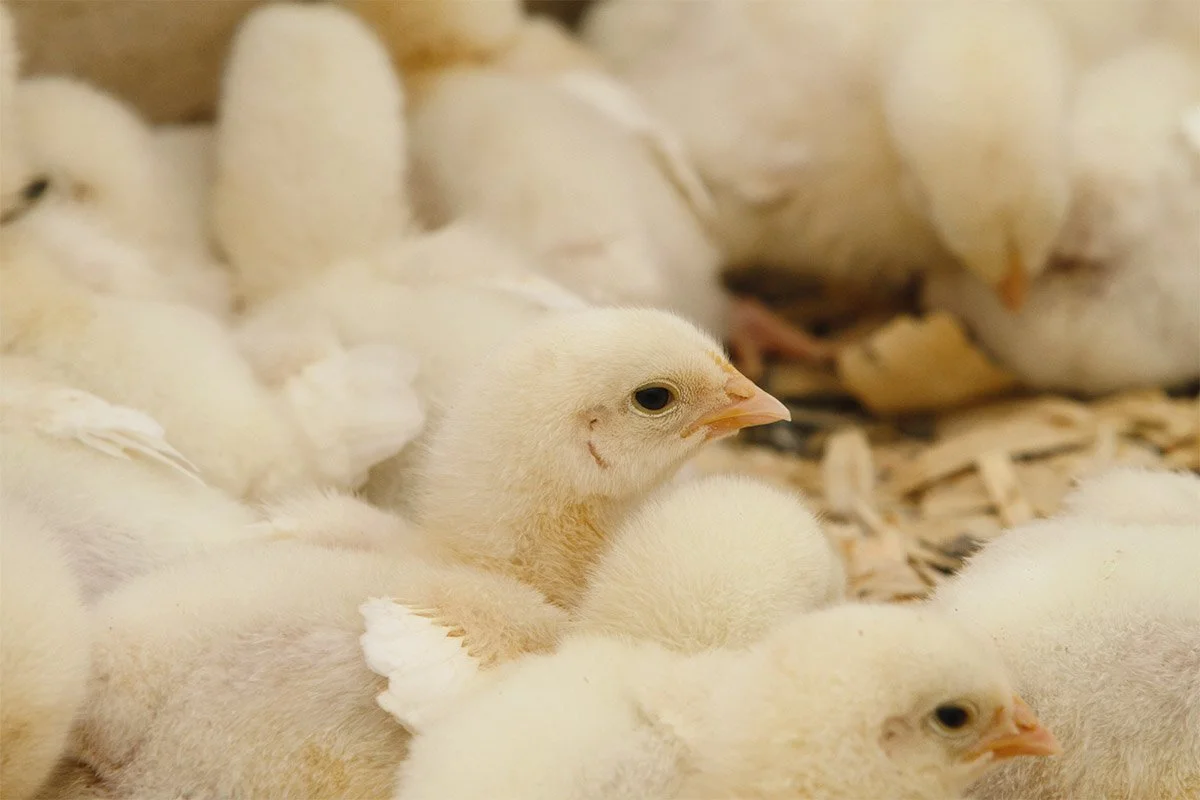
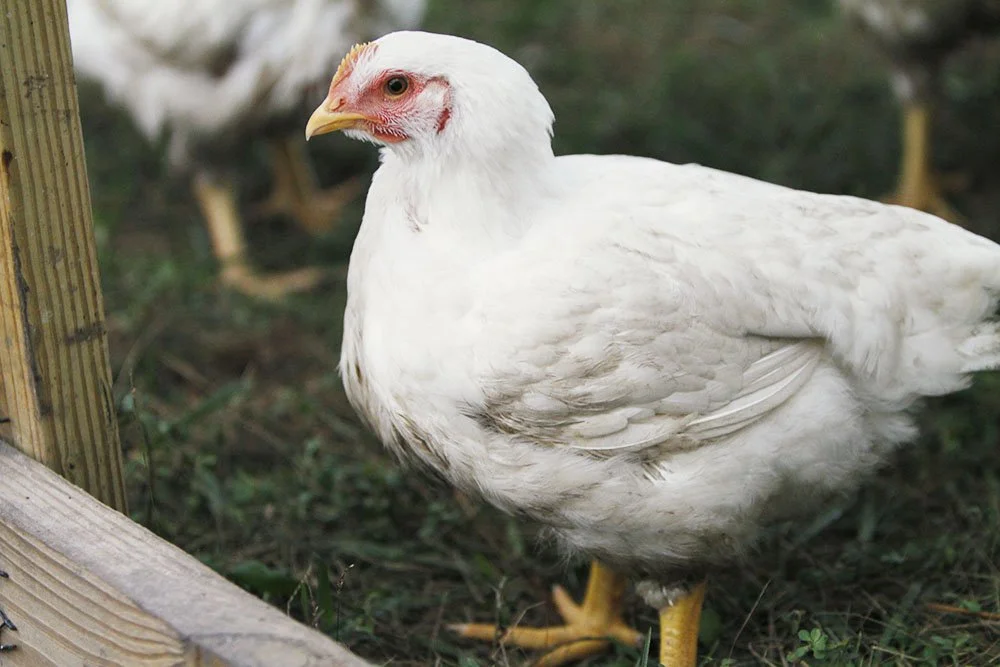
Bred to be rapidly growing meat birds, Cornish Cross require special feeding and management to achieve their full potential. The most economical breed to date for achieving maximum yield and efficiency.
Under optimal conditions, Cornish Cross can reach 4lbs- 5lbs harvest weights at just 6 weeks of age. Final weights can be higher depending on the final grow-out duration.
Cornish Cross consume a considerable amount of feed compared to layer breeds and require a much more attention for manure management, therefore we recommend to raise Cornish Cross completely separate from other chickens.
Charley’s tips on raising Cornish Cross meat birds.
Cornish Cross are a hybrid meat bird developed specifically for efficient meat production. They are not bred for long-term laying or breeding, but for fast growth and excellent feed conversion.
Time to harvest: 6–8 weeks
Average dressed weight: 4–6 lbs
Temperament: Calm, docile, easy to manage
-
New chicks require a warm, clean brooder.
Brooder basics
Heat source: Start at 95°F, reduce 5°F per week
Bedding: Pine shavings (never slick surfaces)
Space: 0.5–1 sq ft per chick
Water: Fresh, clean, always accessible
Feed: High-protein broiler starter (20–24%)
Tip: Keep feed and water slightly elevated to reduce waste and wet bedding.
-
Cornish Cross eat aggressively and grow quickly, so feed management is critical.
Recommended approach
Weeks 0–2: Free-choice feeding
Weeks 3+: Controlled feeding (remove feed overnight or feed on a schedule)
Why limit feed?
Prevents leg issues
Reduces heart failure
Improves overall bird health
Expect each bird to consume 10–14 lbs of feed from chick to harvest.
-
Cornish Cross thrive on pasture when moved daily.
Best housing options
Chicken tractors / mobile pens
Floor space: 1.5–2 sq ft per bird
Shade and airflow are essential
Daily chores
Move pens at least once per day
Refresh water often
Monitor birds for leg strain or overheating
-
Cornish Cross are hardy when managed properly.
Watch for:
Leg weakness (avoid slippery surfaces)
Overheating (shade + airflow is critical)
Wet bedding (can cause foot issues)
Keep them active by encouraging movement—fresh grass helps.